
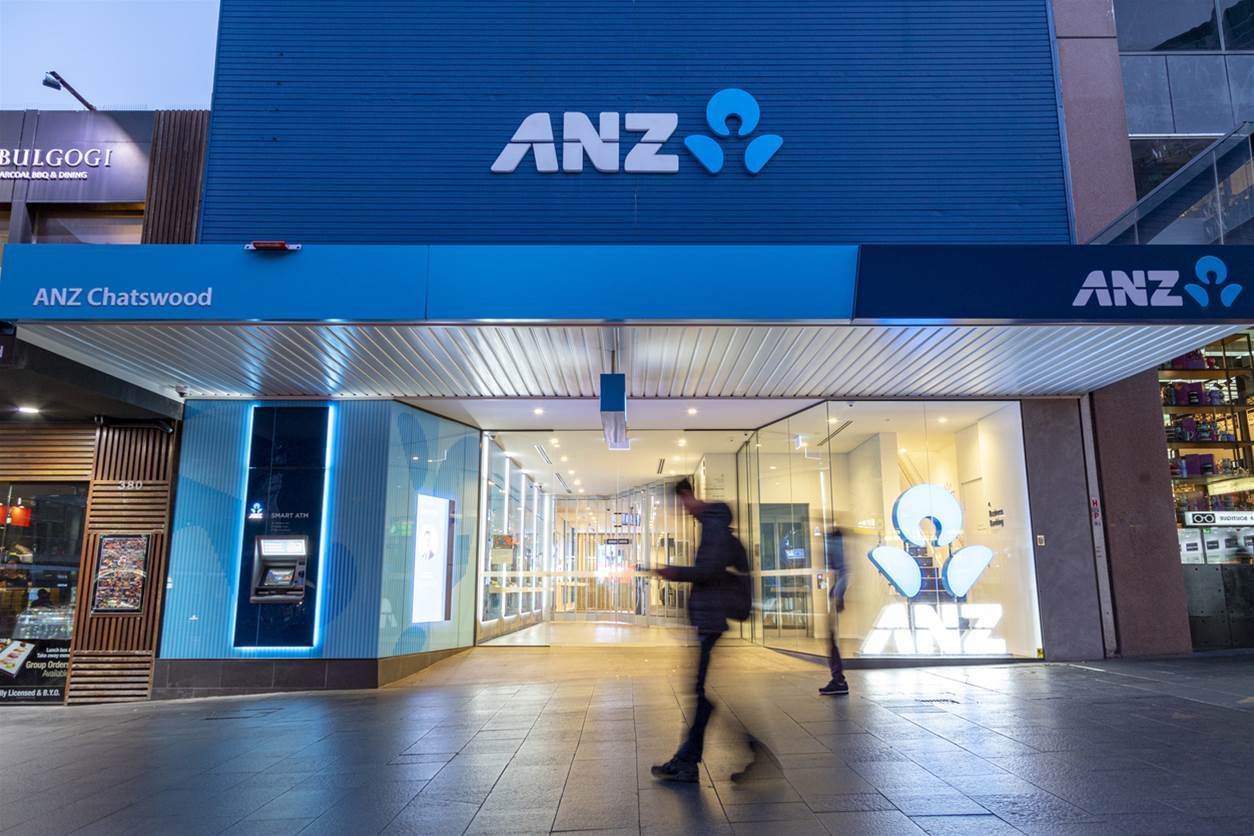
ANZ Bank in 2026: Profits Up, Strategy Shift, and What It Means for Borrowers
ANZ Bank started 2026 with a strong financial result but also significant internal changes and strategic shifts that have a...
Low Doc Loans: Borrow With Tax Returns or Bank Statements Instead of Payslips
Get a home or business loan without full financial documents. Learn how low doc loans work, what lenders require, and explore flexible options with expert guidance from FS Loan.
"*" indicates required fields
Getting a mortgage can seem daunting if you’re self-employed or if you can’t provide traditional income documents such as payslips and full tax returns. Most lenders use standard paperwork to assess income stability, which can often put business owners, contractors and freelancers at a disadvantage.
This is where low-doc home loans come in. They offer a more flexible way to demonstrate your income through alternative documents. These loans are intended to make home ownership accessible for those who do not fit the standard ‘PAYG employee’ profile.
They do, however, have more rigid lending criteria and greater lender scrutiny, but they do offer more flexibility.
A low-documentation (low doc) home loan is a type of mortgage for borrowers who can’t provide complete traditional income documents.
Instead of depending on:
Lenders may accept other proof, such as:
These loans are commonly used for:
The key idea is “no documentation” — but alternative documentation instead of the standard PAYG proof.
The usual home loan is different to a low doc loan, because the lender will look more at your financial behaviour and what you declare your income to be, rather than relying on formal employment records.
Instead of traditional validation, lenders look at:
Borrowers usually sign an income declaration, confirming their stated income estimate.
Lenders, however, still apply risk controls, so the approval process is not necessarily easier, just more flexible in documentation.
Low doc loans are for borrowers who are financially capable but do not fit into traditional documentation requirements.
Typical borrower profiles include:
These loans are especially helpful when:
The documentation is reduced, but lenders still have strict eligibility criteria to manage risk.
Most lenders require:
This helps lenders assess whether income is reliable over time.
| Requirement | Typical Condition |
|---|---|
| ABN activity | At least 6–12 months active |
| GST registration | Often required if the income threshold is met |
| Business continuity | Same or related industry experience preferred |
Lenders may accept:
The more consistent your records, the better your approval chances.
Lenders look closely at your credit behaviour.
You usually need:
Even minor issues can reduce borrowing power or increase interest rates.
| Factor | Low Doc Loans |
|---|---|
| Maximum LVR | typically 60% to 80% (most lenders cap at 80% for low doc, vs 95% for full doc) |
| Interest rate premium | typically 0.3% to 1.0% p.a. above standard variable rates |
| LMI | usually required for LVR above 60% to 70% depending on lender |
Example: A borrower who qualifies for 6.2% p.a. on a full doc loan may pay 6.7% to 7.2% p.a. on a low doc loan for the same property.
Low doc loans can help self-employed borrowers and business owners apply for a home loan with alternative income verification methods. FS Loan helps you understand lender requirements, compare loan options, and prepare the right documents for a smoother approval process.
Low doc loans are often confused with full doc self-employed loans, but they are very different in structure.
| Feature | Low Doc Loan | Full Doc Self-Employed Loan |
|---|---|---|
| Income proof | BAS, bank statements, accountant’s letter | Full tax returns + financial statements |
| Documentation level | Reduced | Full financial records required |
| Approval flexibility | Higher flexibility | Standard lending criteria |
| Interest rates | Higher | Lower (if strong financials) |
| LVR limits | Usually up to 80% | Up to 90–95% (depending on lender) |
| Target borrowers | Incomplete financials or irregular income | Established businesses with full records |
Low doc loans are essentially a flexibility product, while full doc loans are a standard verification product for business owners.
Your ability to qualify for a low-doc loan depends heavily on how you present your financial position.
Not all lenders offer low-doc loans. Specialist lenders are generally more experienced in assessing self-employed income patterns.
Even without full tax returns, consistency matters:
Lenders use credit behaviour as a key reliability indicator.
Consistent savings over 3–6 months helps demonstrate repayment ability and financial control.
It is important to declare income realistically. Inflated income declarations can lead to:
Self-employed borrowers who struggle to provide traditional documentation can find a practical solution in low-doc home loans. They offer flexibility and access to finance but require stronger deposits, solid credit history, and careful financial presentation.
At FS Loan, we help self-employed borrowers structure their applications correctly, choose suitable lenders, and improve approval chances through the right documentation strategy.
Contact an experienced mortgage broker on +123 456 7891 or make an enquiry online.
Understand how low doc home loans work and what lenders assess when standard income documents are not available.
"*" indicates required fields
They can have slightly higher interest rates due to increased risk, but they provide access to finance when traditional options are limited.
It may be possible with some lenders, but terms could be stricter and require a larger deposit.
Yes, most lenders require an active ABN to verify your business activity.
Yes, once you have full financial documentation, you may be able to refinance to a standard loan with better terms.
No, they can also be used for business purposes depending on the lender.
Approval times can be relatively quick if your documents are complete and meet lender requirements.
Your ideal home deserves a mortgage that aligns with your financial goals. Together, we can make it happen.
Looking for more tools to plan your finances? Explore our full suite of calculators designed to help you make smarter home loan decisions.
"*" indicates required fields
ANZ Bank started 2026 with a strong financial result but also significant internal changes and strategic shifts that have a...
Record levels of mortgage refinancing have been one of the biggest changes in the home loan market in 2026 in...
Buying your first home in Australia has always been dependent on two things: interest rates and lending rules. RBA rate...

Helping you find the right home loan with expert guidance and trusted support.